
Week-to-Week: Categorizing The Pitt with Michael Z. Newman
Two media scholars parse the generic uncertainties of Max's throwback medical drama

Week-to-Week is the sometimes weekly, mostly sporadic newsletter of Episodic Medium, reflecting on the media industries. To receive future newsletters and updates on the shows we’ve covering weekly for subscribers, become a free subscriber.
I wrote a version of this opening sentence where I referred to The Pitt as the year’s breakout new series, but that sounds wrong. It’s not a false statement, to be clear, but it reads weirdly given that The Pitt has been so successful in large part due to its throwback to earlier eras. At a time when streaming shows are becoming more movie-like by the day, The Pitt’s commitment to a 15-episode medical drama is a breath of familiar air that seems fresh in contrast to its competition.
That being said, I had a conversation with fellow media scholar and Friend of the Newsletter Michael Z. Newman recently which seemed like a valuable subject for a dialogue about how we’re thinking about the narrative structure of this alleged “throwback.” Specifically, we talked after a Vulture newsletter by another Friend of the Newsletter Josef Adalian framed The Pitt as a procedural alongside an interview where HBO head Casey Bloys does the same. Michael’s message to me was effectively a simple question: why are they talking about The Pitt as a procedural when it clearly isn’t one?

I want to let Michael expand on his position in a moment, but I first want to make clear to readers that he is coming to this from a position as a foremost scholar of broadcast television narrative: his 2006 article “From Beats to Arcs: Toward a Poetics of Television Narrative” has been cited over 300 times, a vital resource for how the broadcast drama was evolving at the turn of the century. He’s therefore the perfect person to talk to about how The Pitt navigates numerous boundaries across its first season.
So Michael, I’ll let you dig in: what was your reaction when you saw The Pitt referred to as a procedural (which, to be clear, has been happening long before Joe’s newsletter)?
Michael Z. Newman: Well first of all I’m not the language police, and if the TV industry and critics and viewers are calling shows like The Pitt procedurals, it just signals to me a shift in usage and it probably also represents some changes in TV storytelling and style. I’m eager to understand it.
The key distinction for me is between episodic and serialized storytelling. The Pitt is a serial. The shows it has the most in common with, from where I sit, are not just ER obviously but also St. Elsewhere, which was similarly focused on doctors and nurses, and leavened the seriousness of life-and-death medical care with a lot of comedy and irony and strong character beats for the physicians. The key narrative quality of St. Elsewhere, like its MTM predecessor Hill Street Blues, was how it interwove two classic television genres, soap opera and medical drama (cop drama for Hill Street). And the soap element wasn’t so much a matter of heightened melodrama or emotional excess or anything like that—it was the focus on continuing stories about characters in a web of interpersonal relationships.
Procedural is a term from genre fiction that used to describe mystery novels that show how a police detective goes about solving a case. The first time I recall hearing this term (in the ‘80s, as the child of an avid mystery reader), it was to describe the Martin Beck novels by the Swedish writers Maj Sjöwall and Per Wahlöö. When this term jumps to TV, it is applied to shows like Law & Order and CSI, which have the same kind of investigation and resolution pattern of storytelling. These shows typically fall more on the episodic side of the episodic-serialized spectrum. They’re not very soapy, they don’t have a lot of arcs that span multiple episodes and seasons, and they can be viewed out of order in reruns. The TV business used to favor episodic shows like these and like so many cop and medical dramas. They appealed to casual viewers who didn’t tune in every single week, and they worked well in off-network syndication, where they could be aired out of order. There might have been some continuities from one episode or season to another but the viewer didn’t need to remember them in order to enjoy the show. You could catch an episode of Magnum, P.I. or Miami Vice and understand the whole situation, and the plot was pretty self-contained within the episode. No one called them procedurals in the ‘80s, but they fit the later usage.
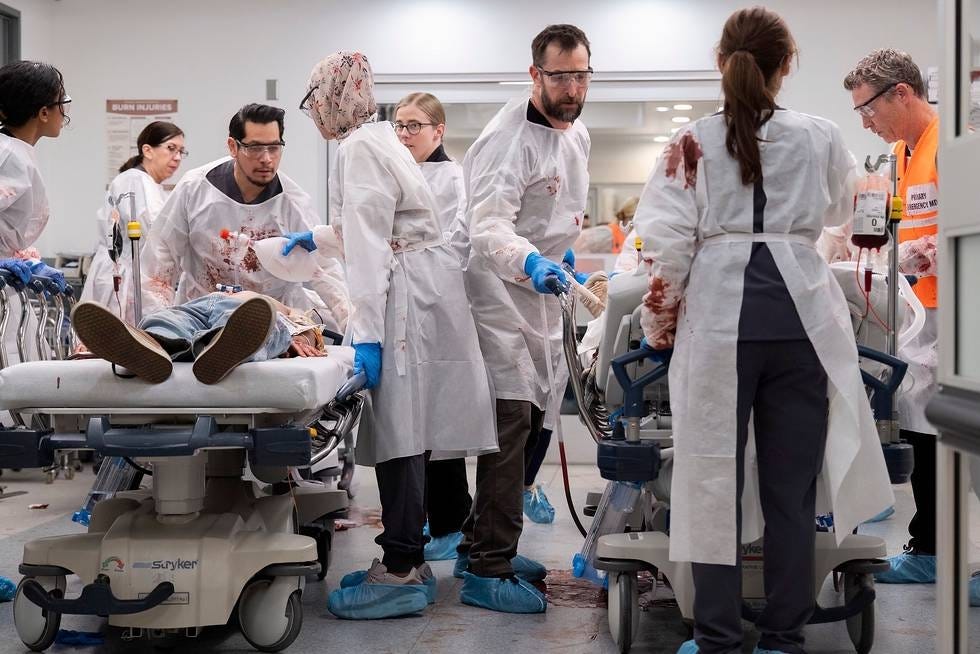
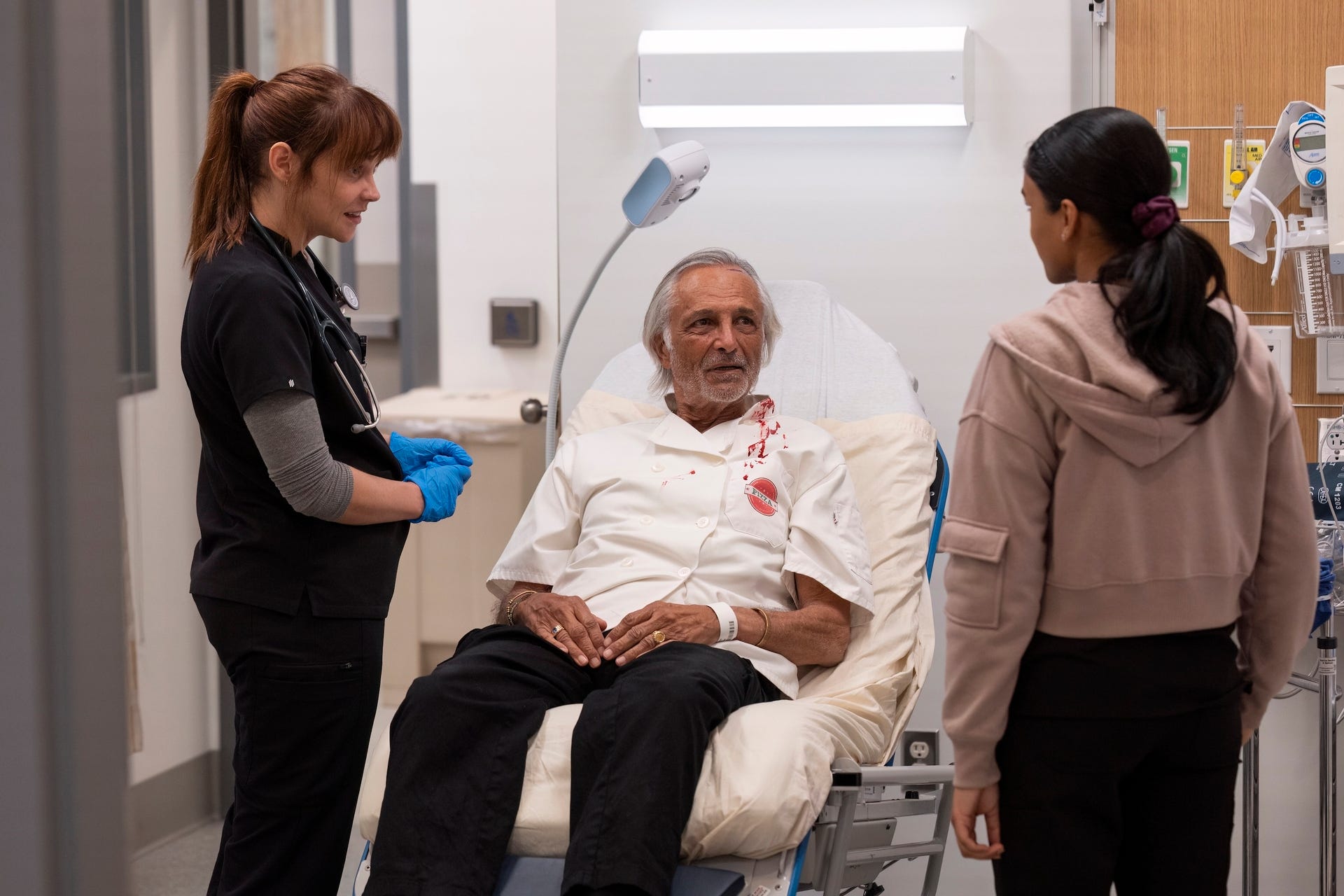
The Pitt is not that kind of show. We expect scripted prime-time TV to be serialized now in a pretty total inverse to how we used to expect it to be episodic. Viewers start at the beginning and you can dip in and out or skip some episodes if you want, but the shows seem to be made to be consumed from beginning to end, like a long novel. I guess it has medical cases that we follow in a way analogous to how a detective solves a murder mystery (following the patient from when they present with symptoms to when they are diagnosed to when they are discharged or sent up to surgery or maybe die in the ER), but the cases aren’t episodic in the sense of being contained to one episode. The fentanyl OD patient, Nick, is a good example of a serialized medical case unfolding over multiple episodes. Same with the blustery patient who assaults Dana after multiple episodes of being obnoxious to the hospital staff, and the antivax parents at the end of the season whose kids have measles.
Maybe the implication of the use of “procedural” for this show is that everything on TV is so serialized now that the term can slip into other meanings to distinguish among serials rather than between episodic and serialized storytelling?
MM: When you first asked me about this, I was reminded of something I brought up in my footnotes on Emma’s reactions to the show here at Episodic Medium, which is how unsettling it was to have the show play with the balance between episodic and serial storytelling in its “cases.” For every case like Nick that extends across a good third of the season, there’s a smaller case that could be a longer issue but ends up being efficiently triaged by our intrepid doctors.
If I could offer an explanation for the slippages tied to “procedural” in this case, I think some of this has to do with the state of medical television in the 2000s. Scrubs and House are obviously wildly different shows, but they both used a patient-of-the-week structure to create medical spins on two episodic forms: the sitcom and the procedural. The focus on diagnostics in both instances—more specifically in the case of House, but it’s often the frame in Scrubs as well—reframes the hospital drama as a mystery genre, and thus creates procedural expectations. Like all TV in the 2000s, there was an embrace of seriality that you wouldn’t have seen even a decade earlier, but there was also a clear desire to reframe the medical drama in alignment with a more procedural engine.
MZN: Yes, the sitcom format lends itself to this kind of closure which is parallel to the crime procedural or to the mystery premise of House. The medical cases can be mysterious at the diagnosis stage (The Pitt has a particularly rewarding one like this of the online influencer whose symptoms are caused by a beauty product), but are often closer to the kind of storylines on legal dramas, which sometimes include a mystery element but are often premised on something more like a competition between two possible outcomes (with twists and reversals and dramatic outcomes pending). These serialized cases on The Pitt have some of that quality too, especially the agonizing decisions about whether to suspend treatment for a dying patient, or the effort to convince skeptical parents to intervene with their child suffering from measles. It’s a suspenseful format whether resolved in one episode or not for several weeks. Actually I think the seriality and the weekly release structure makes this storytelling more compelling as we have the gaps in between the episodes to reflect on the situation and wonder about the outcomes. Releasing the whole season at once would have made these storylines less effective, at least for me.
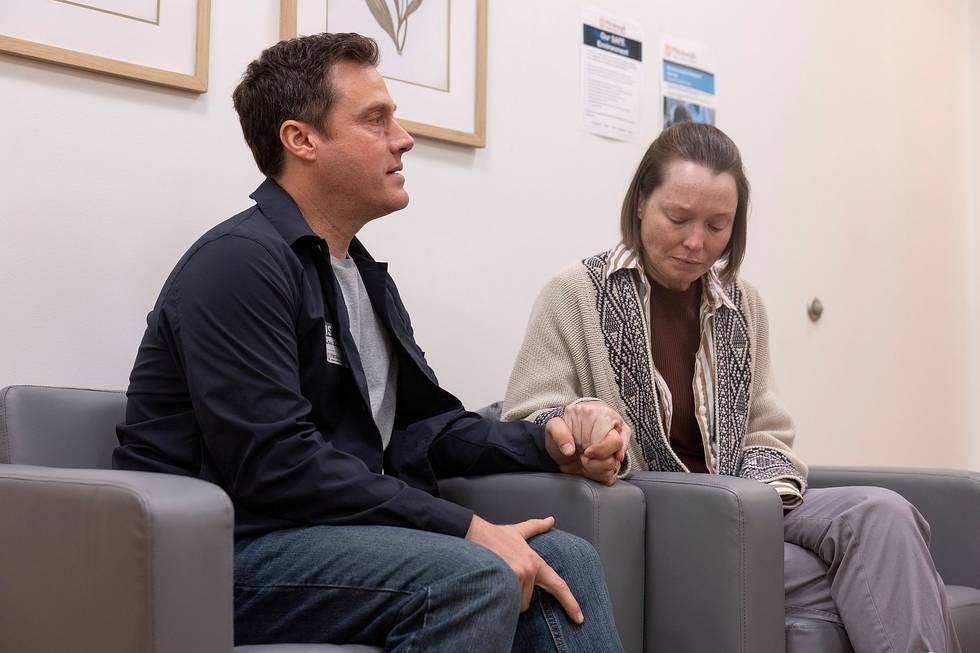
The other hugely popular medical series of the past twenty years is Grey’s Anatomy, which I stopped watching a long time ago but kind of keep up with by proxy. The gender associations we make with these varieties of doc shows shape our sense of these generic markers. Soapy storytelling has such strong associations with serialization, with the never-ending sagas and their twists and turns, and also associations with romantic relationships, which are typically the aspect of TV storytelling that most resists episodic closure. A good love triangle can stretch over a whole season or more. Something about the matching of feminized/serialized makes me wonder if the idea that The Pitt is a procedural comes from its focus on the masculinized professional world at the expense of feminized romantic storylines. We get so little of that, just hints of past relationships (e.g., Robby and Collins, McKay and her ex) and a real tease of a storyline for Javadi and Mateo, which left me wanting more. It’s hard to develop a will-they-or-won't-they over a single day of story time while also introducing so much trauma and critique of the state of health care.
MM: What you’re getting at here reinforces how much tension The Pitt has within its basic premise. On the one hand, its weekly airings and approach to serial patients encourage a level of engagement more aligned with a soap opera, as evidenced by the escalating investment among the audience as the season progressed. But on the other hand, the real-time format necessarily limits how much serialization can be achieved, particularly among the doctors. The Langdon and Santos storyline is the most explicitly soapy construction the writers invested in, and it’s also the one that created the most pushback, as viewers understandably read Santos’ suspicions as a part of her character development rather than as hints to Langdon’s addiction.
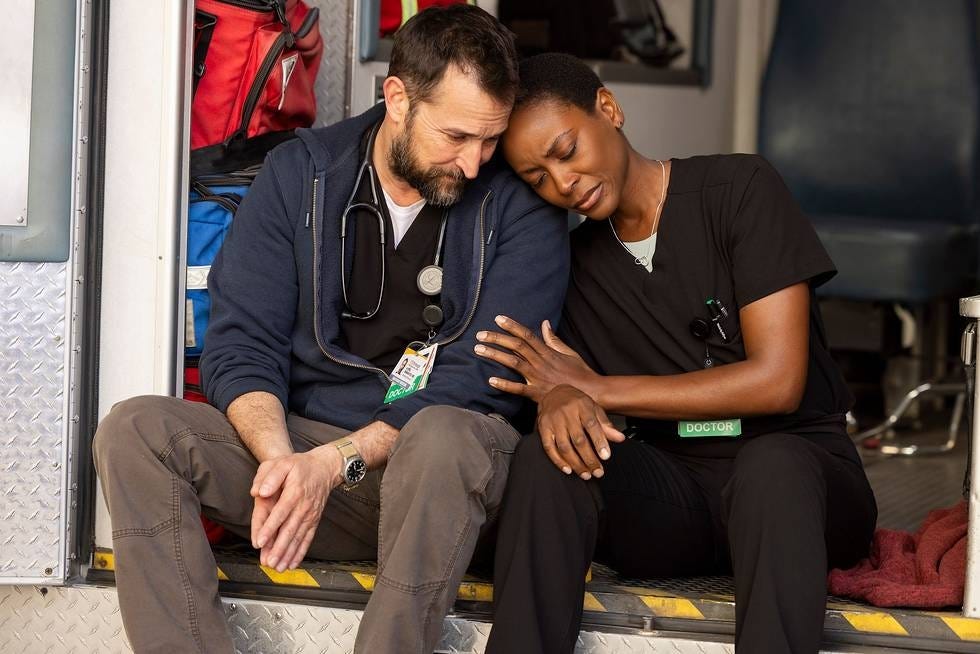
At least in this case, I’d argue the tension was all purposeful, even if I didn’t always agree with the intention. The show wanted us to be caught off guard when Santos was right, because it wanted us to fall into the trap of the masculinized professionalism of Langdon. It also goes the other way, though, as the show teases us with the looming Pittfest and the lingering questions about David’s whereabouts, eventually descending into chaos. But in the end, the soapy resolution proves to be a red herring: David wasn’t the shooter, and although Robby might reach an emotional low point, the team as a whole shifts to a rapid fire but nonetheless procedural approach to the mounting trauma cases.
In this way, we see how The Pitt created this question to begin with. On a moment-to-moment basis, it leans on the ER as a procedural engine, able to segment out individual storylines when it wants or needs to. But taken as a whole, it too often resists closure for it to actually be a procedural, even if its characters in their workmanlike approach to their jobs might conceive of it that way for the sake of their sanity. But this is also a very specific consideration of the first season of an ongoing television show—will we be having this same conversation once the show naturally leans on the seriality of a second season?
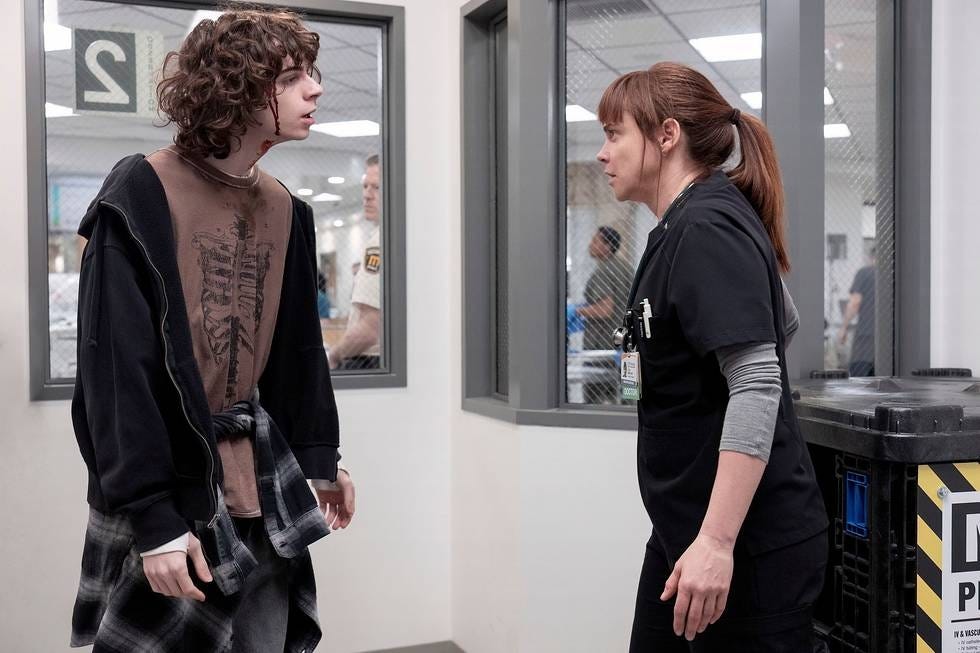
MZN: I will come back to my second season thoughts in a second, but your idea of the “procedural engine” intrigues me along with the idea of resisting closure. The storyline with Robby and Jake is a nice example of a serialized arc resisting closure (it would be surprising not to get more of the Robby/Jake story when the show returns, though really who knows) and as you’d expect of a medical show, any character can become a patient and blend the suspenseful and perhaps procedural medical case plots with the soapy character relationship plots, which happens with Jake and his girlfriend.
Taking all of this into account, I don’t get how a show with so many of these season-long arcs could be seen as episodic, except for the simple fact that we experienced it as part of a weekly ritual. This plus the professional setting seem to me like the key elements influencing the “procedural” claim, more than the storytelling devices or the engine you identify, pleasurable as it may be. And, I guess, there’s also the context of streaming series having trended toward an “8-hour movie” format (I also think of this as a novelistic format, so many of these shows being literary adaptations). The Pitt gives such a familiar prime-time drama feeling by contrast. An influential New York Times Magazine piece in the 90s referred to ER, along with other dramas of that era like NYPD Blue, Homicide, and My So-Called Life, as “prime-time novels.” The Pitt looks from our vantage point so much less like a prime-time novel than the glossy movie-star shows on HBO or FX adapted from books. For 2025, it’s just so prime-time serial.

As for the second season, one of my peeves with the current state of scripted TV is the length of time between seasons. I don’t like the idea of having to do homework to upload into my active memory the plot of a season from two years ago in preparation for the new one. That runs against my preference that watching TV in the evening is for pleasure. This means I get bored and confused more than I’d like, and maybe that’s on me. So I’m encouraged by the news that The Pitt is coming back in less than a year (which is still too long IMO). Also, they have established such compelling characters who you care about and worry about, so I’m not going to forget them so easily.
That said, I still expect the show to be focused on the medical cases first of all in season 2. The real-time, linear storytelling may mitigate against paying off some of our investment in character relationships, but they will have the opportunity to do fun things with the gap in story time. The first season was very artful in dropping character backstory notes and revealing details bit by bit over the weeks. I expect more of this. This reminds me of another thing I have loved about The Pitt, which harkens back to the 90s prime-time novel era: its faithful linearity is a pleasure. (The Covid flashbacks are a little polarizing and I neither loved nor hated them.) I’d be most disappointed by season 2 if it messed with the premise of linearity, which seems really unlikely.
I think your question is also about how the second season will pick up from the loose causal threads of the first, and we probably all have questions, some of which are clearly prompted by how the first season wraps up. The more it picks these up, perhaps, the harder it will be to think of the show as episodic/procedural rather than serialized?
MM: It does seem like the tensions we’re observing will have to change a little, yes. I think you’re right that the show won’t suddenly become soapy just because it’s returning, especially since we’re isolated in a single day of story time (and they can’t even repeat the season’s soapiest element, since two straight mass casualty incidents would seem too convenient). However, at the same time, it has to become somewhat soapier, because a lot of runtime previously devoted to introduction and exposition now has to go somewhere else. Some of that will just be the introduction of new characters, but I would argue that even the show’s writers have to feel a degree of narrative frustration at the inability to explore the characters over a longer period of time. As audience investment in those characters grew, a simple “Where Are They Now?” factor that will resolve quickly won’t be enough.
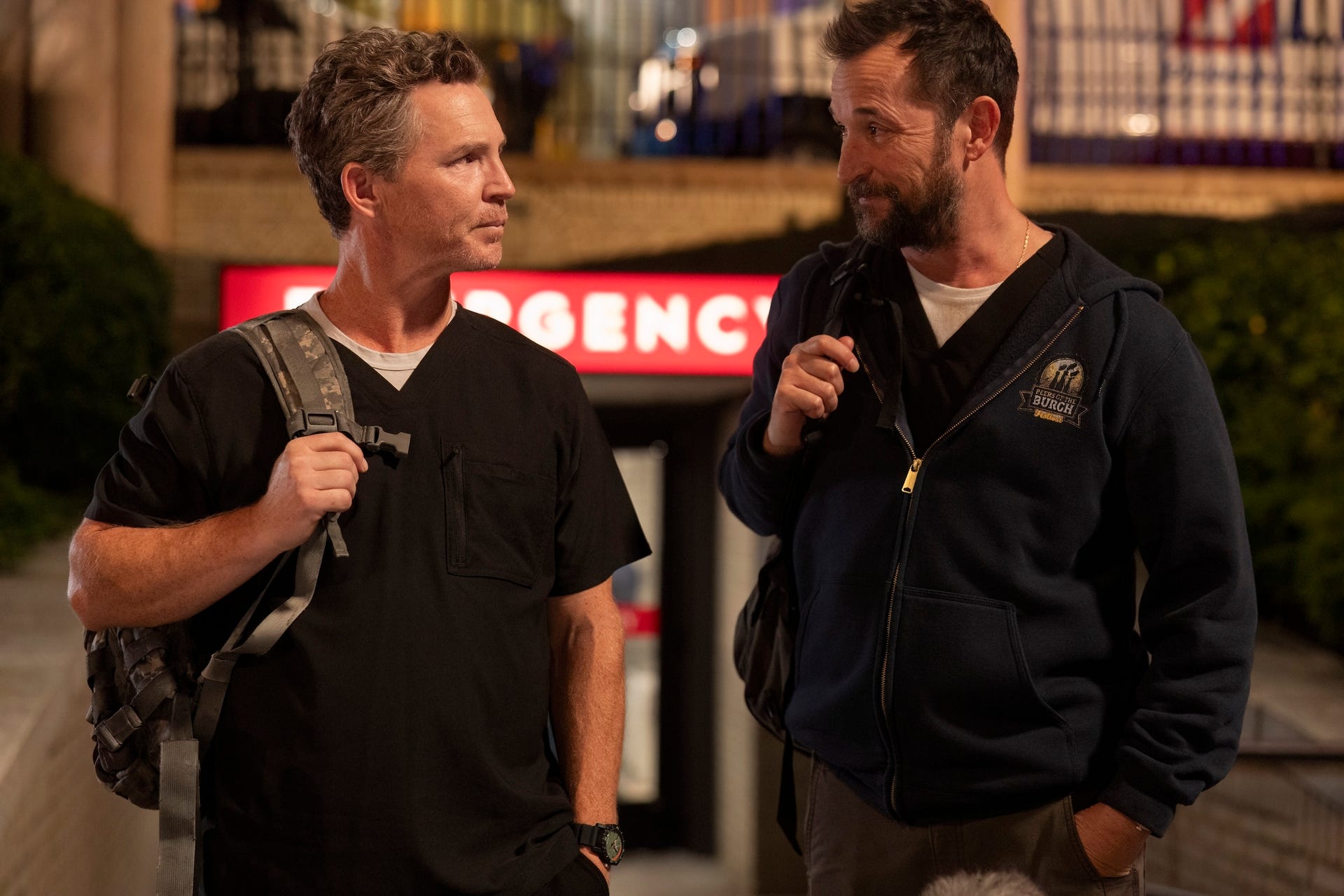
It’s interesting to see how the producers are framing this: in interviews, R. Scott Gemmill and Noah Wyle have focused on how they think of each season as a serialized journey for Robby as a character, which is really pushing back against the procedural framework. However, at the same time, they talk about the July 4th setting for season two through the lens of a procedural engine based on the types of cases it would offer (and, relevant to my own research, their need to shoot the exteriors in Pittsburgh in September). Where those lines blur, I’d argue, is in the show’s interest in the evolving state of health care—how will the hospital have changed after ten months? What about the workplace itself will force changes in the characters and in their work? As the show evolves, that itself becomes more serialized, reinforcing my ultimate feeling that even the parts of The Pitt we’re identifying as procedural will cease to feel as procedural as our investment in the characters continues to accumulate.
I will note, as a final provocation, that the tension we’re observing has always been the case when it comes to the fan communities surrounding procedurals. While the genre proliferated on broadcast based on its episodic narratives and value in syndication, those shows persevered due to dedicated fan communities who invested in the characters to the point it forced the shows to include more serialization. Shows like The Pitt have already integrated that expectation into their design, and while I know why industry trade discourse is more focused on the “dog on hind legs” quality of a streaming show with a procedural engine, the conversations I’m seeing about the show among commenters here at Episodic Medium and online are responding to the seriality above all else. And as the show’s “breakout” status necessitates more coverage amid Emmy campaigns and promotion for season two, I’ll be interested in the choices they continue to make in framing the show’s storytelling within and around the terms we’re identifying.
MZN: I’m not as plugged into fan discourses as you are, but I’ll just make a final note how everything old is new again, or there’s nothing new under the sun, or one of those adages. The same kind of tension between episodic and serialized qualities of storytelling has been animating TV viewers since the 90s at least (The X-Files is a classic example, along with Twin Peaks). So maybe this is just one more throwback pleasure for folks watching The Pitt, investing in the characters and relationships even if the show withholds some of the character beats we would love to get in favor of the sensational, spectacular life-or-death medical heroics that give the show such high stakes.
Someone on a non-Pitt-related podcast (Blank Check, I think?) referred to it as a "prestigural," and I both love and hate the portmanteau in this case. You're right that it's too serialized to be a pure procedural. But its interest overall is too much in the moment-to-moment specifics of the work for it to feel like a Fargo or some other 10-Hour Movie season.
Loved this discussion, as I always love thoughtful criticism. But as for how I feel about it: probably best to cross-post (and expand) one of my lil essays from under the finale recap:
I said it early in the season, but it was some kind of kismet watching this show as I, along with some friends, started rewatching HOMICIDE LIFE ON THE STREET on Peacock. I think the spirit of that tragicomic NBC cult legend (is there any other kind?) lives on in THE PITT in a lot of ways; HLotS could go more broad with its comedy, but it was a deeply character-focused procedural with an unvarnished sort of feel, half about the work itself and half about the social / economic / political realities it forces the characters to face (though HLotS makes policing out to be less rewarding, which... is good, actually).
It's so nice to have this kind of show without the hagiographic fantasy bent of a Sorkin production.
I'll say, though: I've been aggravated by some of the discourse around THE PITT. Not because people are surprised it's good... or I guess maybe I am, in a way? The show itself does not need any defending. It's getting its due respect, it's going to win some awards, and people are actually watching it (unlike the efforts of our late lamented crew out Ballmer way).
It's more the weird tenor of mourning -- thinking here of the Defector piece about "TV's Silver Age", but it's been widespread. A lot of people seem to cling very tightly to the idea of grand nose-to-tail serialization as the mark of good TV, and for those people it seems like the success of THE PITT, for any or all good qualities, signals a regression.
It's a strange thing to witness, having watched HLotS, which both slaps hard and predates THE SOPRANOS by several years. I don't get it, honestly, this sense that dragging, mid-grade serialized epics like BOARDWALK EMPIRE or WHEEL OF TIME or (the particularly aggravating) YOUR FRIENDS AND NEIGHBORS, or whatever Craig Mazin is scripting in a given year, mark a healthier and more fulfilling ecosystem for expression than the emergence of an all-cylinder character procedural.
What made Peak TV Peak was not its quality or even its ambition to make TV a newly novelistic medium, it was the money being blasted out of cannons at anyone who wanted to do anything. That's what made it an interesting era. It had such capacity that it took a lot of risks.
The network-friendly forms of storytelling were only a limiting constraint from one angle, even when THE SOPRANOS was breaking through, even as basic cable prestige identified itself by its long form storytelling. I feel like so much of this neurotic dialogue about the Pitt is implicitly built on a premise that we should have “advanced” beyond network TV forms, leaving them rightfully irrelevant.
It’s true that those forms COULD be creatively limiting, but only when pursuing particular goals from particular angles. You could still do a lot with them, had you a mind to — a limitation in one case can be a *constraint* in another. Quite often, if not always, art suffers when it *lacks* constraints (see, again: YOUR FRIENDS AND NEIGHBORS). But somehow we feel obligated to hang apologies on our love for form-forward art.
I’m reading, in all this sublimated terror re: the collapse of endless industrial demand for TV, a sort of echo of what’s happened to literary discourse over the last 50-60 years: endless arguments about whether the survival of lit with a lack of strict form or artifice (literary fiction / “novelistic” serial TV) is threatened by lit that more closely observes form and embraces artifice (genre lit / “episodic” TV). The assumption always underlying those debates is that only one of the two creates a culture of progress or sophistication. It’s such a boring debate, and it never ends.
(I’d be remiss not to point out how funny it is that while it moved away from procedural / incremental form in conceiving its highbrow self, prestige TV had 0 reservations about the genre trappings that so vex its cousins in printed literature. It actually makes highbrow TV the more obnoxious of the two, in many ways.)